So part of my program was obviously studying the Balkans, but the second half was about Turkey! Sadly, we've just been studying Turkey from Freiburg (and our LAST class was today! that went by way too quickly!) since the protests in Izmir and Istanbul convinced the program officials that it was not safe enough for us to travel there, hence the Croatia/Albania/Kosovo trip. But I figured that since I posted so much about the history and politics of the other countries, I should write up a little something about Turkey, too.
Turkey is in a unique position - only the smallest corner actually sits in Europe, but it's not really considered a Middle Eastern country, either. Turkey is more of a bridge between the east and the west. However, they have been striving, since 1987, to join the European Union, and insist that they are a European country. Arguments can and have been made for both sides, but the fact remains that Turkey is a member of every European organization except for the EU, and first applied for associate membership in the EEC (European Economic Community) in 1959. Poor Turkey... Their application was finally accepted and negotiations began in 2005.
In order to achieve EU membership, a candidate country must open and close 35 chapters of reforms and then be voted in unanimously by the existing EU member states. Turkey has thus far closed only 1 chapter, on Science and Research, and only 13 others are even open. One major problem for Turkey is its relations with Cyprus and Austria. Turkey refuses to recognize Cyprus as a sovereign state, much like the problem between Serbia and Kosovo; Austria is still upset about the siege of Vienna dating back to 1529, which eventually led to the 1683 Battle of Vienna and the ensuing Great Turkish War with the Ottoman Empire. Austria has said that as long as they are a member of the EU, Turkey will never join. But you have to give some props to Turkey for not being deterred! They are making very slow progress, but its still progress all the same.
The recent protests in Turkey and the rising authoritarianism of the AKP bring questions about Turkey's future; until these protests started, though, Turkey was doing relatively well. They would still be called more of a defective democracy because of the influence and power of the military, but they have been making great strides. People sometimes make the mistake of saying that Turkey is autocratic, because their foreign policy is less independent and more nationalistic than that of the US, but what I think is important for people (specifically, Americans) to acknowledge is that American democracy isn't necessarily the only form of democracy. I think we all know that we have our own problems within the American political system; just because a democracy or government has different policies than we do doesn't make it not a democracy. There is the issue, though, that Prime Minister Erdogan has gone a little rogue. So it's hard to evaluate Turkey right now - it is impossible to predict what the outcome of this situation will be.
Another problem with Turkey is its close proximity to Iraq, Iran, and Syria. The EU fears that with all of the instability in this region, having EU borders stretch this far might present problems that they don't want to have to deal with. If the conflict spills over into Turkey, it would become the EU's problem; they would rather have Turkey as a buffer country to the Middle East. The EU also has a clause called the acquis communitaire stating that a country wishing to join the EU must have resolved all border disputes - Turkey has a major dispute with Syria over the Hatay province, and problems with Armenia over the recognition of the 1915 Armenian genocide.
I wish I had some pictures of Turkey and actual experiences there - although I did love the trip to the Balkans! - but I'll just have to leave this as an informative post. Classes are now over and we have our final exams on Thursday.. and on Friday morning I'll be starting my journey home. The trip back might be just as eventful, and possibly more so, than the trip over! I'll be taking a train to Frankfurt, then two separate flights home, both with a connection and one-hour layover... But for now, I'm just focusing on 1) studying for exams, 2) writing my final paper, and 3) soaking in every last moment of Freiburg that I can!
Tuesday, July 16, 2013
Saturday, July 13, 2013
Just an Ordinary Saturday
Today is unfortunately my last Saturday in Freiburg. So what to do but explore as much of the town and surrounding area as possible! My friend Jimmy and I went for a 3.5 hour bike ride this afternoon. Our other potential bike-riding friends elected to get their beauty sleep instead... all I can say is that they missed out! I didn't take any pictures, because biking with two hands on the handlebars is stressful enough as is, and we were too busy exploring to stop for pictures. But the scenery was gorgeous! We found our way into a couple adorable little towns, got lost for a bit in the middle of a huge orchard, toured through some fields and wooded paths, and explored the northern end of Freiburg, too. However, I also ran 4 miles this morning, so now I really just want to either a) sleep or b) go swim a little bit... because that would mean I'd done a reverse triathlon (albeit with breaks in between the sections) and that'd be kinda cool! Aaaand that's why my non-athlete friends think I'm crazy. Ah well. I did stop by the grocery store on my way home for some cherries. I was craving cherries. But then I also found some delicious looking Johannisberren! We don't have them in America, and they looked delicious, so I figured I should try them while I still can. I have no idea what they actually are, but I intend to devour them all.
| Johannisberren |
| Kirschen |
Friday, July 12, 2013
Weinfest!
This week, Freiburg had Weinfest! It is exactly what it sounds like - a festival of wines! They set up tents, wine stands, and tables all around the Munsterplatz. You could buy a glass for 1.50 euro and either keep it or return it once you were done to get your 1.50 back - I elected to keep mine as a souvenir, since it was the 100th year! Then once you had a glass, you could wander around to the different stands sampling all types of wines for just a few euros.
I didn't take too many photos - it is really more of an event that you have to experience yourself! There are lots of people, but the atmosphere is very relaxed (as you can imagine, with that much wine!) and the wine is absolutely delicious. I kept wishing the whole time that I could bring my dad to Weinfest - or that I could at least bring some of the wine to him! - not only because I know he would have enjoyed it, but also because I could have used his expertise! There were so many wines it was hard to choose which ones to sample. But everything was delicious, so it didn't matter too much.
| actually taken from Google, but I have the 100 Jahre version of this! |
Thursday, July 11, 2013
Just a Random Act of Kindness to Brighten My Day!
Riding
the tram home tonight, I was 20 cents short trying to buy my ticket. As
I was scrounging around my bag for 2 and 5 cent coins, this little old
man started talking to me. He was speaking in German, so it took me a
minute to figure out what he was saying, but finally I realized that he
was offering me a tram pass. He had an extra pass - it was a month long
pass due to run out at the end of today, so he had no more use for it. I
wanted to thank him again before I got off at my stop, but when I
turned around, he was gone. So thank you, random stranger, wherever you
are!
Share the love. Have you done a random act of kindness lately?
Wednesday, July 3, 2013
Eurocorps and Fort Mutzig
Yesterday we took a trip to Strasbourg to EUROCorps, and then took a guided tour of Fort Mutzig. As usual, I learned a lot of history! I have never had a good memory for dates, and never really liked history when I was younger, but I somehow am only one class away from having a History minor in college. I guess it all depends on who is teaching it! A few key dates and facts we learned, concerning EUROCorps:
1963 - Elysee Treaty concerning defense matters
*exchange of personnel
*cooperation in defense industries
1989 - German-French Brigade (about 6000 soldiers) to promote cooperation between the two countries and prevent future conflicts
May 1992 - La Rochelle Report
*promote European Security and Defense identity
*enhance European solidarity
*set up conditions of a European alliance with the North Atlantic Alliance
The three capitals of Europe are Strasbourg, Luxembourg, and Brussels
There are five Framework Countries: Belgium, Spain, France, Germany, and Luxembourg; and four Participating Countries. The U.S. is actually a future participating country, which is odd, seeing as we are not part of Europe, but this is because American armed forces often work together with their European counterparts. While Europeans already know how to interact with other nationalities, since they are all so closely situated, Americans do not, and are coming over to learn.
Some pictures from the tour of Fort Mutzig:
| a very old bread-maker |
| The Rhine! |
The Balkans: Some Vocabulary
I am a big fan of languages, so every country we visited I tried to learn as many words of the local language as possible (basically, Bosnian and Albanian, which they speak in both Albania and Kosovo). I've compiled a glossary of the words that I learned (with some questionable spelling, but I did my best):
Bosnian:
Zdrova - hello
Opriste - excuse me
Hvale - thank you
Voda - water
Ciao - goodbye (this is apparently used in a lot of countries!)
Da - yes
Pivo - beer
Albanian:
Tung - hello/goodbye
Talutum - please
Falemendarit - thank you
Pije - beer
I also saved coins from every country, because I am also a big fan of foreign currencies! Kosovo uses the Euro.
| Bosnian marks |
| Croatian Kuna |
| Albanian Leke |
The Balkans: Part IV: Kosovo!
Huzzah! The last leg of our trip was Kosovo! We arrived in Pristina at
about 11pm to the best hotel I think I've ever stayed in (Hotel Afa - go
there. Be amazed). Everyone was super friendly, they even kept the
kitchen open a little longer just for us to have some excellent veal
soup, there were massage chairs in the lobbies of two of the floors (for
free!), showers that looked like space shuttles (with jets on the
sides, a shower radio, lights inside the shower, and some of them
doubled as a sauna and jacuzzi), a beautiful garden, and the best
breakfast buffet ever. I made myself multiple chocolate crepes every
morning. That's right. Crepes. With chocolate and bananas. They also had
breakfast pizza, way too many varieties of cheese and meats and bread
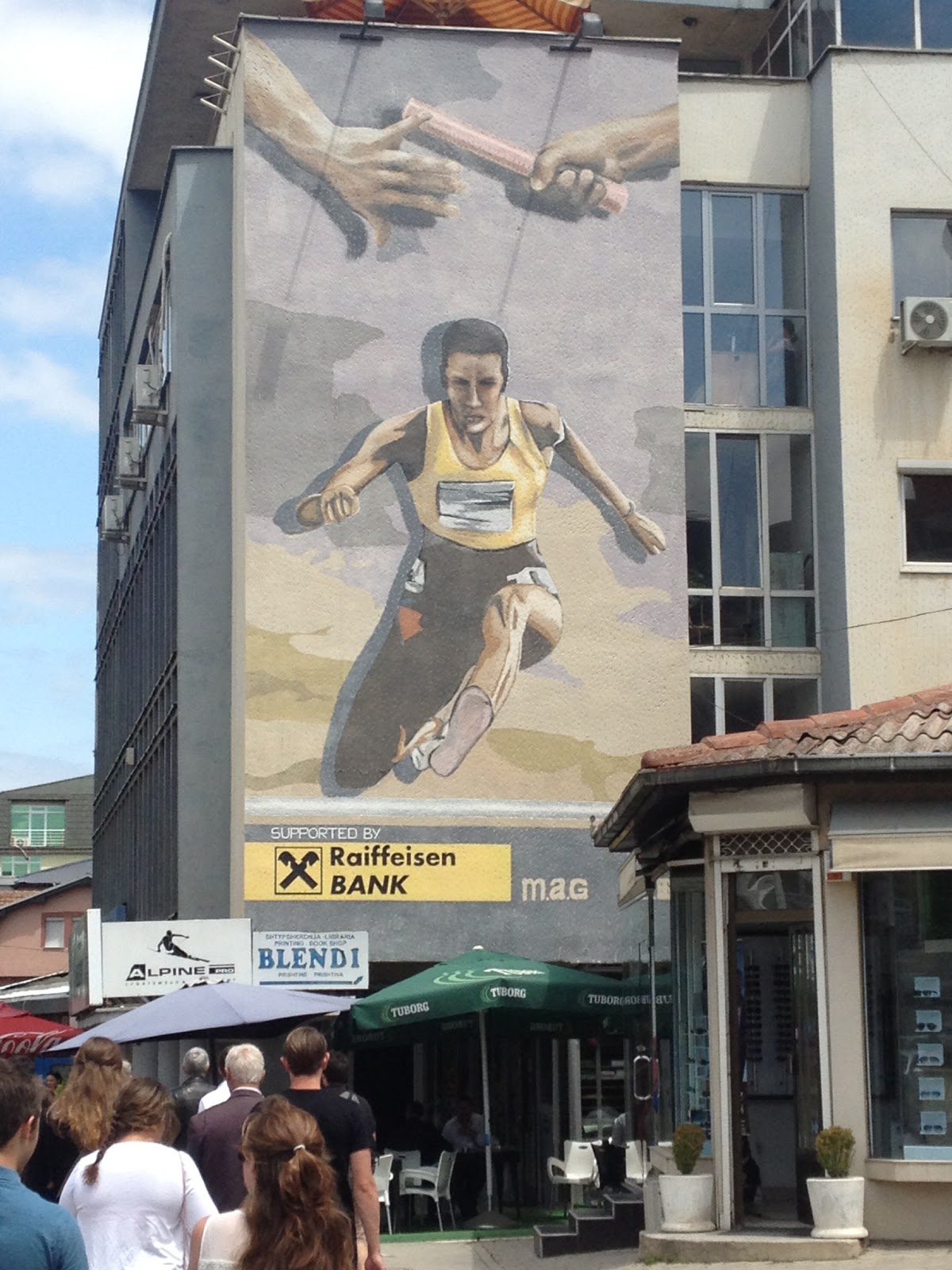
to choose from, eggs, and delicious fruit. Apart from the amazing hotel, Pristina was also pretty cool. A few pictures to start things off:
One of the teachers at the IES center is actually from Pristina, Kosovo, so she knew exactly what to show us, and also speaks Albanian, so things were a little less stressful with her there to translate!
Time for a quick history lesson again: In the 90s, the Kosovo Liberation Army took up arms against Serbia, but it wasn't until there was a massacre of more than 70 Kosovars that an intervention was triggered. Serbia refused a proposal for peace, even though the Albanians accepted, so the United States bombed military points in Serbia and Kosovo for three months. Although Kosovo had been almost completely cleansed of Albanians, they came back very quickly once the UN troops arrived. The UN ruled until 2008, when the EU came in as a supervising mission. There are still international troops in Kosovo, but a lot fewer, and EULEX is there Today, Kosovo is still not recognized as a sovereign state by all countries.
Our first day, we visited EULEX; because 5 member states of the EU do not recognize Kosovo as a state, their Pristina office has to be careful of the language they use in their reporting so as not to upset those 5. Other than that, though, they said that everything runs fairly smoothly. The goal is to keep the rule of law and enforce the actions of EULEX, so they look past the issue of sovereignty to work together. Their goal is to give an example of how investigations should be done, and to implement the message that no one is above the law, but the mafia/organized crime circuit present a problem, because prosecutors are often threatened if they go after big targets.
We also talked to a political party leader, Albin Kurti. His opinion on EULEX was that they are focused on short term stability, which is in spite of injustice, rather than on long term stability. He also talked about the problem of "Brain Drain." Students go to college, get diplomas, and wait for foreign investment, but it doesn't come and there are no jobs, so the best and the brightest leave the country.
Finally, we went to KFOR Kosovo. Their view was that EULEX is a police mission and a judiciary; the institutions of Kosovo don't have the ability to go into northern Kosovo, so EULEX acts as a first responder there. In the south, there is "dynamic stability" - democracy in action. KFOR sits back and lets the institutions figure out for themselves how to deal with problems like protests or demonstrations; once the institutions can no longer handle the situation, they bring in EULEX, and if the situation is still not resolved, they call in KFOR. KFOR is there to support the peace, so as to enable dialogue; their two biggest concerns are SASE (safe and secure environment) and FOM (freedom of movement).
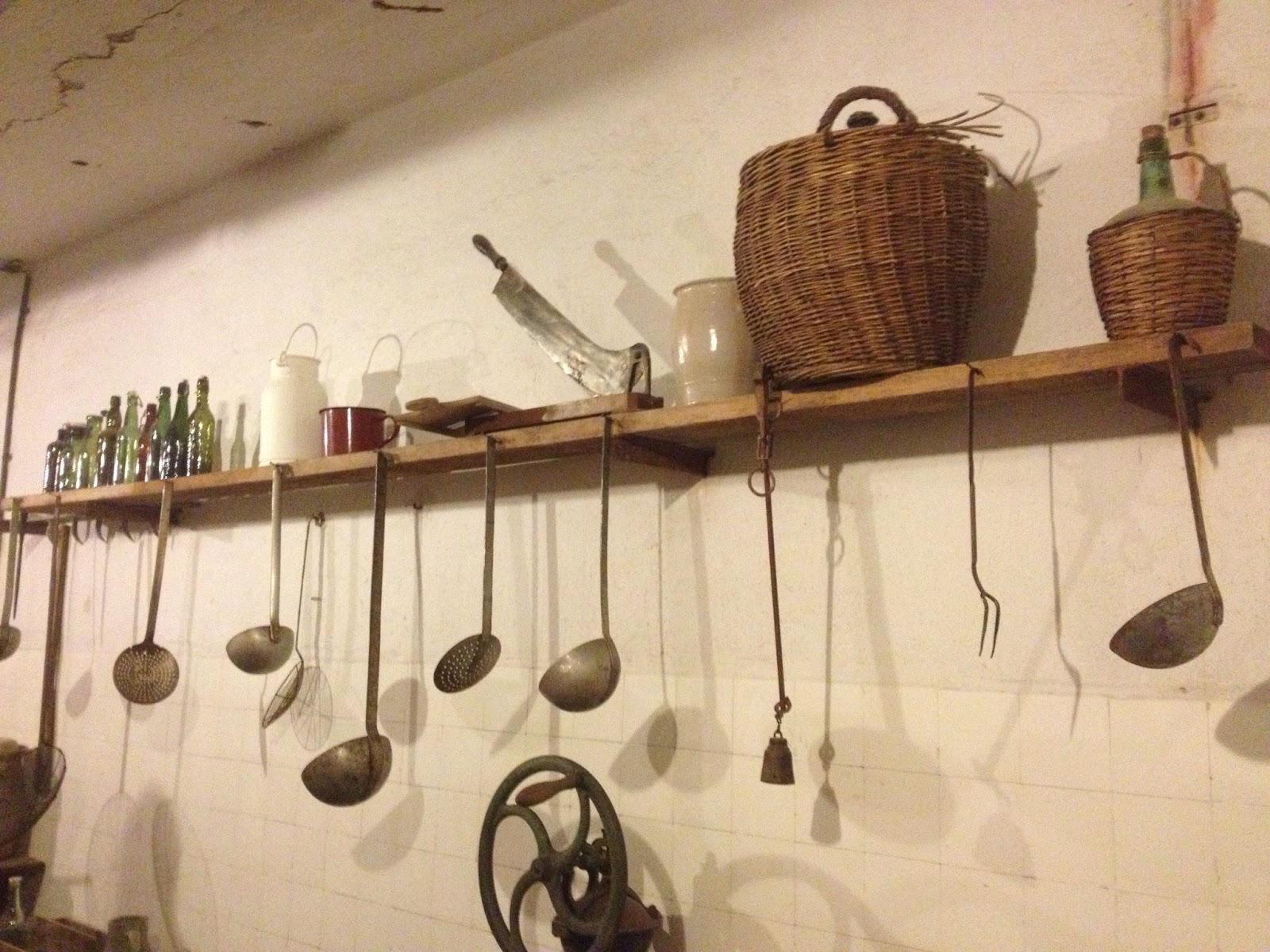
Okay, so those were the main highlights of things, but again, feel free to ask any questions! I have a lot more notes on most of the meetings, so I just tried to touch on the big topics. Now for some more pictures! We visited a culture museum:
And took a day trip to Prizren ...
... where we hiked up to some old ruins!
... and stopped by Kosovo Polje on our way to the airport
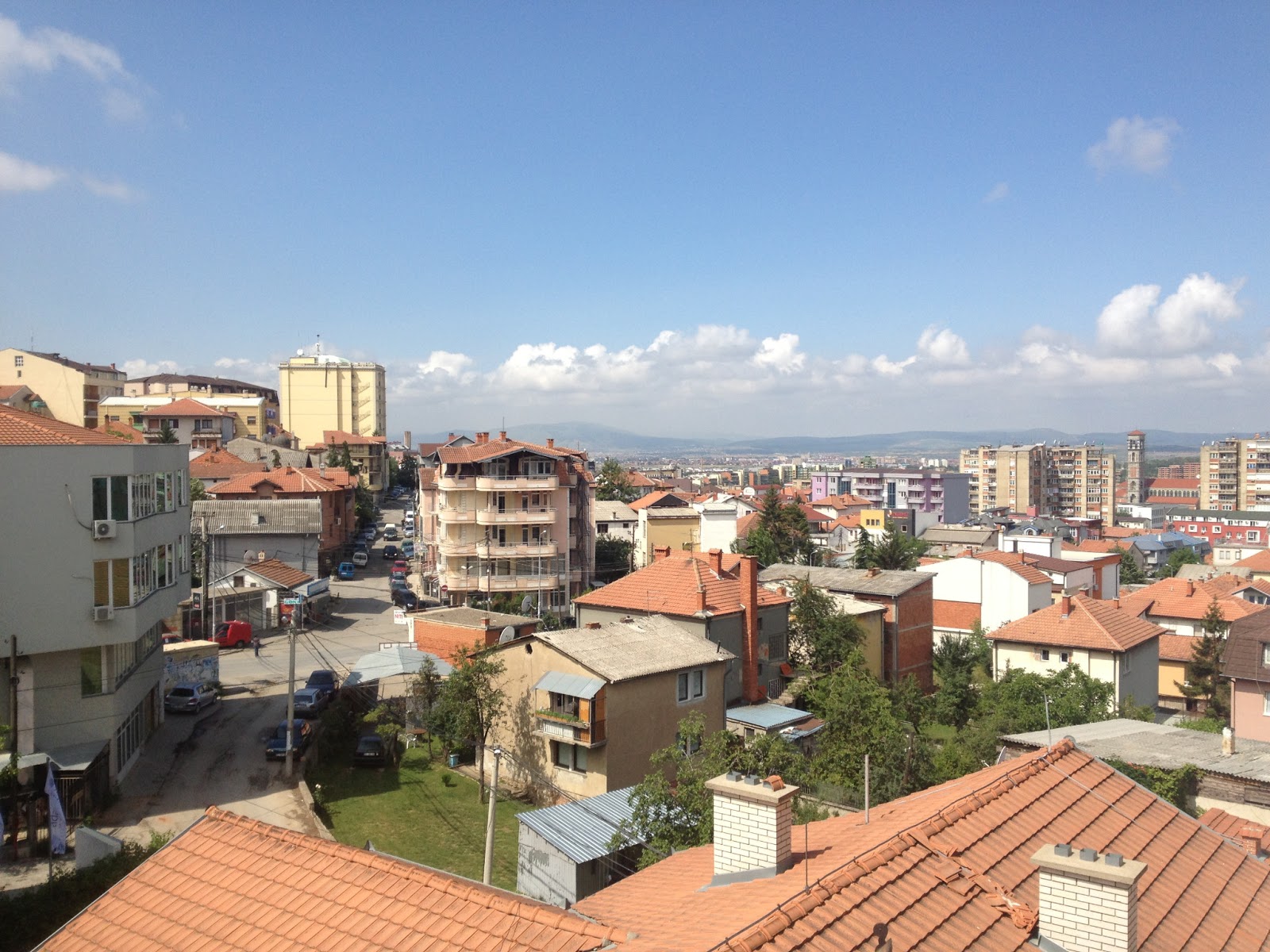
| the view from our room |
| couldn't resist a picture of this! |
| A fountain dating back to the Ottoman Empire! |
| That's right, they have a statue of Bill Clinton |
| The Newborn Monument (unfortunately the street prevented me from backing up to get the whole thing) |
Time for a quick history lesson again: In the 90s, the Kosovo Liberation Army took up arms against Serbia, but it wasn't until there was a massacre of more than 70 Kosovars that an intervention was triggered. Serbia refused a proposal for peace, even though the Albanians accepted, so the United States bombed military points in Serbia and Kosovo for three months. Although Kosovo had been almost completely cleansed of Albanians, they came back very quickly once the UN troops arrived. The UN ruled until 2008, when the EU came in as a supervising mission. There are still international troops in Kosovo, but a lot fewer, and EULEX is there Today, Kosovo is still not recognized as a sovereign state by all countries.
Our first day, we visited EULEX; because 5 member states of the EU do not recognize Kosovo as a state, their Pristina office has to be careful of the language they use in their reporting so as not to upset those 5. Other than that, though, they said that everything runs fairly smoothly. The goal is to keep the rule of law and enforce the actions of EULEX, so they look past the issue of sovereignty to work together. Their goal is to give an example of how investigations should be done, and to implement the message that no one is above the law, but the mafia/organized crime circuit present a problem, because prosecutors are often threatened if they go after big targets.
We also talked to a political party leader, Albin Kurti. His opinion on EULEX was that they are focused on short term stability, which is in spite of injustice, rather than on long term stability. He also talked about the problem of "Brain Drain." Students go to college, get diplomas, and wait for foreign investment, but it doesn't come and there are no jobs, so the best and the brightest leave the country.
Finally, we went to KFOR Kosovo. Their view was that EULEX is a police mission and a judiciary; the institutions of Kosovo don't have the ability to go into northern Kosovo, so EULEX acts as a first responder there. In the south, there is "dynamic stability" - democracy in action. KFOR sits back and lets the institutions figure out for themselves how to deal with problems like protests or demonstrations; once the institutions can no longer handle the situation, they bring in EULEX, and if the situation is still not resolved, they call in KFOR. KFOR is there to support the peace, so as to enable dialogue; their two biggest concerns are SASE (safe and secure environment) and FOM (freedom of movement).
Okay, so those were the main highlights of things, but again, feel free to ask any questions! I have a lot more notes on most of the meetings, so I just tried to touch on the big topics. Now for some more pictures! We visited a culture museum:
| outside of the Kosovo culture museum |
| there was a rally for the Turkish PM for some reason |
... where we hiked up to some old ruins!
| my roommate for the trip, Emily, and me |
| the view from the top! (I like to climb things) |
Subscribe to:
Posts (Atom)